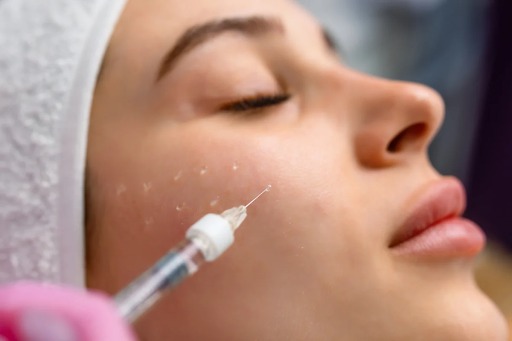
Skincare has gone beyond creams and serums and into lasers, peels and injectables, and a new category has been rising in clinics: treatments involving polynucleotides. You may have come across the terms ‘salmon DNA facial’ or ‘salmon sperm facial’ (a catchy nickname) – but what it boils down to is a reasonably straightforward concept about encouraging skin repair and retaining moisture.
This article explains what polynucleotides are, how they work, what to expect in a treatment and considerations before booking.
What are polynucleotides?
Polynucleotides are chains of nucleotides, the building blocks of DNA. The ones used in aesthetic medicine are normally purified from salmon or trout, with the protein content removed to avoid a reaction. PDRN (polydeoxyribonucleotide) is the name given to this same family of ingredients.
The salmon connection is primarily about compatibility – fish DNA is similar enough to humans that it’s tolerated, and it’s available in large quantities for purification. The nickname is catchy, but what goes into the skin is an extremely pure and sterile product.
PDRN was originally investigated for its wound-healing properties, and the transition to cosmetics was made later, when it was applied to skin repair.
How do they work?
The mode of action seems to be stimulation of fibroblast activity, encouraging the skin to perform its natural repair processes and encouraging the production of collagen and elastin. They also appear to bind water and have mild anti-inflammatory and antioxidant properties.
It’s important to contrast PDRN with other injectables. Dermal fillers volumize the skin; anti-wrinkle injections relax specific muscles. PDRN doesn’t do either; it works to improve the overall look of the skin. As such, it’s best suited to addressing fine lines, dehydration, textural concerns or crepey skin, rather than deep folds or volume loss.
Who might consider them?
Skin concerns that might be aided by a polynucleotide facial include tired-looking skin, dehydration, fine lines, textural irregularities, minor scars, crepey skin around the eyes and neck and improving the condition of the hands – a tell-tale sign of age. Because the product can be placed almost anywhere, clients also sometimes request it as a neck, décolletage or hand treatment – areas that sometimes show signs of age before the face.
PDRN is contraindicated for those with a fish allergy, during pregnancy or breastfeeding, or where there is an infection or inflammation; an experienced practitioner will take a medical history before treatment as standard.
What does a session involve?
A session is reasonably short, running to about 40 minutes, and the practitioner will cleanse the skin and, if required, apply a numbing cream. Small quantities of the product are then placed into the skin, using fine needles or a cannula, depending on the area and the technique.
A polynucleotide facial is normally considered as a course of two or three treatments, a few weeks apart, followed by maintenance. It’s also common to combine it with other skin treatments, such as microneedling or laser therapy; this should always be discussed with a practitioner.
How do they compare with other options?
Polynucleotides are usually compared with other skin-quality treatments, and understanding the differences is important. Hyaluronic acid skin boosters focus on hydration; platelet-rich plasma uses elements from a person’s own blood to stimulate repair; and microneedling encourages collagen production by disrupting the skin with tiny needles. All have a place, but the concerns addressed are different: hydration, scarring, texture or laxity.
Some people are drawn to PDRN for the combination of hydration and the repair angle, while others may prefer an option with more research behind it. A good practitioner will be able to advise on what’s best for your concerns, not just the one they offer.
What results can I realistically expect?
Results with PDRN tend to be slow but long-lasting. While some people feel that their skin looks better for the next few days, with improvement continuing over the next few weeks, many practitioners would say that improvements last for several months, although they will depend on age, skin condition, lifestyle, and sun protection.
It’s important to be sensible about the evidence for PDRN. Research into its use for wounds is fairly extensive, but studies into its use in cosmetics for wrinkles and skin aging are limited and usually small-sample, and many are short-term. This doesn’t mean that PDRN is ineffective, but it’s important to temper claims about miraculous results with caution. Think of PDRN as a gradual, ongoing improvement in the condition of the skin, rather than a quick fix.
It’s also worth bearing in mind that costs can vary greatly. A course of treatment usually requires more than one session, and it’s worth asking for an estimate for the whole course.
Side effects and safety
Side effects are generally mild and short-lived. The most common are redness, small lumps where the product was placed, swelling, tenderness and bruising; these will resolve themselves within a few days. Most people can resume normal activities the same day, but it’s a good idea to refrain from strenuous exercise, saunas, swimming and too much sun for a day or two.
More serious side effects, including infection or allergic reaction, are possible but rare, especially with the appropriate products and techniques. This is another reason why the reputation and experience of a practitioner is so important.
Questions to ask before you book
Before booking any injectable skin treatment, there are a few important questions to ask:
Who will be carrying out the treatment, and what are their qualifications?
What product will be used, and can you see the packaging?
How many treatments will be needed?
What are the risks, and what happens if something goes wrong?
Are there cheaper or less invasive alternatives?
A competent provider will be able to answer these questions honestly, and won’t be put off if you decide to wait.
Don’t forget the basics
No in-clinic treatment acts in isolation – to get the most out of any treatment and prolong results, a good skincare routine and sun protection are vital. The right moisturizer, a gentle cleanser, and good sleep will have an impact on the health of the skin; polynucleotides may help the condition of the skin, but sun protection will prolong their beneficial effects.
Final thoughts
Polynucleotides occupy an interesting space in modern skincare – they’re less intrusive than dermal fillers, but more targeted than a standard facial, and they also have less research behind them than some other treatments. PDRN facials can be a good choice for people seeking gradual improvement in the condition of the skin, rather than volume building or wrinkle smoothing – as long as expectations are tempered with reality and a competent practitioner is chosen.
If you’d like to discuss whether this type of treatment would be a good match with your skin needs, a consultation at a clinic, such as Oblique, is always a good idea – a proper consultation should leave you as informed as you need to be, regardless of whether you decide to go ahead.