In 2019, Elon Musk announced on a Tesla earnings call that the company would become an insurance provider. The insurance industry mostly ignored it. Car companies had tried to sell insurance before, and the results had been mediocre.
Five years later, Tesla Insurance operates in more than a dozen states and prices policies using real-time driving data pulled directly from the vehicle’s own sensors. It is the most radical departure from traditional insurance pricing in decades.
From Demographics to Driving Behavior
Traditional auto insurance prices are based on who you are. Your age, zip code, credit score, and marital status feed into an actuarial model that produces a premium. A 22-year-old single male in Detroit pays more than a 45-year-old married woman in suburban Denver, regardless of how either one actually drives. The system prices demographic proxies for risk, not risk itself.
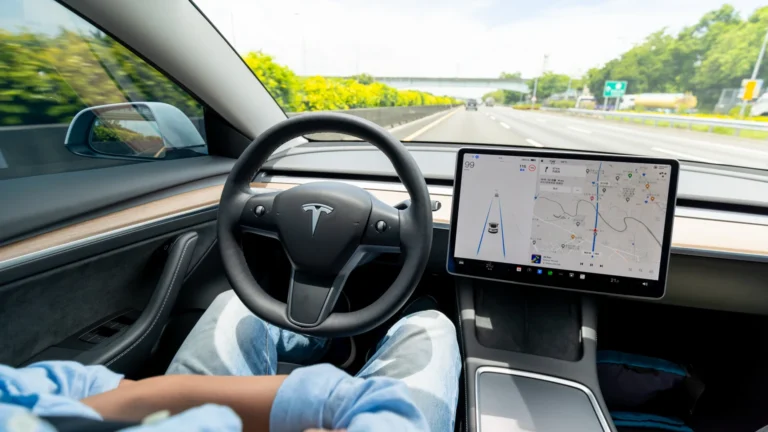
Tesla Insurance replaces those proxies with measurement. Every Tesla generates a “Safety Score” between 0 and 100, calculated from five real-time behaviors: hard braking, aggressive turning, unsafe following distance, forced Autopilot disengagement, and forward collision warnings per 1,000 miles. Your premium adjusts monthly based on that score. A driver with a Safety Score of 95 might pay 30% to 40% less than a comparable traditional policy. A driver scoring 55 might pay more.
The Repair Cost Paradox
Teslas are expensive to fix. Aluminum body panels, a battery pack running the entire floor, limited certified repair shops, and parts that often come only from Tesla itself all push repair costs well above comparable conventional vehicles. The result is that some traditional insurers charge more to insure Teslas despite their top safety ratings from IIHS and NHTSA. The safety features reduce injury claim frequency, but the repair economics push collision and comprehensive premiums the other direction.
This paradox is not unique to Tesla. It affects the broader electric vehicle insurance market, where advanced technology simultaneously prevents crashes and makes fender benders more expensive to fix.
The Industry Follows
Tesla gets the headlines, but the underlying shift is industry-wide. Progressive’s Snapshot, Allstate’s Drivewise, State Farm’s Drive Safe & Save, and Root Insurance all use driving behavior data to personalize premiums.
Older programs relied on plug-in OBD-II devices or smartphone apps with limited data. Newer connected vehicles from Ford, GM, and Hyundai can transmit driving data directly to insurers. The gap between Tesla’s data richness and what traditional carriers can access is closing.
The direction is clear: the industry is shifting from “who you are” pricing to “how you drive” pricing. Within a decade, driving behavior may matter more to your premium than your demographics.
Why Teen Drivers Should Pay Attention
For young drivers, this shift is potentially transformative. Under the current system, a 17-year-old pays dramatically more for insurance than a 30-year-old, regardless of how safely either one drives. Telematics programs offer a path where a cautious teenage driver could pay less than a reckless adult. Several carriers already offer teen-specific monitoring programs, and the data consistently shows that enrolled teens have fewer accidents. Whether the lower accident rate comes from the monitoring itself or from self-selection, the premium savings are real either way.
What Comes Next?
The self-driving liability question remains unresolved. When Autopilot is engaged and something goes wrong, current policies still treat the driver as liable. However, as autonomous capabilities improve, some liability may shift to manufacturers. Tesla’s decision to insure its own vehicles may be a hedge against that future: by owning the insurance relationship, Tesla controls the data, the pricing, and the claims process.
The insurance industry has not fundamentally changed its pricing model in decades. The shift from demographic assumptions to behavioral measurement, driven by Tesla, but spreading rapidly across the market, may be the biggest structural change since the actuarial table was invented.
This article is for educational purposes only and does not constitute insurance advice. Coverage requirements, rates, and availability vary by state and insurer. Consult a licensed insurance professional for guidance specific to your situation.
Stay in touch to get more updates & news on Cars Destiny!