Key Highlights
- Discover screw pegs designed for superior grip in any terrain, from soft sand to hard ground.
- These steel pegs offer unmatched holding power, ensuring your tent stays secure.
- The threaded design provides a rock-solid anchor, even in extreme weather.
- Enjoy the ease of use with a cordless drill for quick setup and takedown.
- Unlike traditional pegs, screw-in types won’t bend or pull out easily.
- Learn how to choose the right pegs for your specific camping needs.
Introduction
A successful camping trip relies on dependable gear, especially for securing your shelter. Struggling with tent pegs that won’t hold in tough ground conditions is frustrating—traditional pegs often fail in soft soil or bend on hard surfaces. This guide shows how screw-in tent pegs offer a reliable solution, keeping your tent secure wherever you camp.
Understanding Screw-In Tent Pegs for Camping

Screw-in tent pegs for camping are a game-changer for campers. Their threaded design lets them drill into the ground, providing a stronger, more reliable hold than traditional stakes. Acting as ground anchors, they offer superior stability in any terrain. Let’s explore what makes them stand out and which materials make them so effective.
What Sets Screw-In Tent Pegs Apart from Traditional Tent Pegs
Screw-in tent pegs outperform traditional pegs in sand or rocky ground due to their threaded design, which anchors them securely. While standard steel pegs depend on friction and can easily pull out or bend, screw-in pegs twist deep into the soil or grip between rocks, distributing force more effectively. This provides a stronger, more reliable hold across various terrains, ensuring your tent stays secure whether you’re on a beach or in rocky terrain—something traditional pegs can’t guarantee.
Common Materials and Features of Screw-In Tent Pegs
When choosing screw-in tent pegs, focus on materials and features for durability. Premium pegs are made from carbon or stainless steel, which resist bending and corrosion—unlike weak plastic alternatives.
Key features to consider:
- High-Grade Steel: Opt for stainless or carbon steel for strength.
- Thread Design: Deep threads suit soft ground; compact threads are better for hard soil.
- Hex Head: A 19mm hex head fits common tools like cordless drills and spanners.
- Reinforced Materials: Some pegs use engineering-grade nylon for added durability without extra weight.
Performance in Sand, Rock, and Diverse Camping Terrains
The true test of any tent peg is its performance outdoors. Screw-in pegs outperform others, offering a secure anchor in everything from soft sand to rocky ground. Their versatility lets you camp confidently, knowing your setup will withstand harsh weather and strong winds.
Whether on loose riverbank soil or hard-packed campground earth, these pegs are built to hold fast. Next, we’ll examine their superior grip in sand and effectiveness on tough surfaces.
Superior Holding Power in Loose Sandy Soil
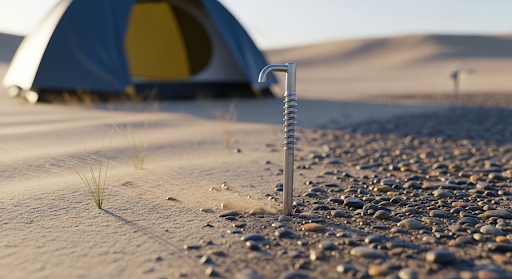
Screw-in tent pegs are ideal for loose sandy soil, unlike standard pegs that easily slip out. Their wide threads dig deep, compacting sand and creating strong resistance for a secure hold—even in high winds. Unlike smooth pegs that rely on friction, screw-in pegs anchor your tent firmly, making them the best option for beach or desert camping.
Effectiveness on Rocky and Hard Ground
Rocky and hard ground can easily bend or break standard tent pegs. For these surfaces, heavy-duty steel screw-in pegs are ideal. Designed to handle tough earth, they can be driven in with a power drill, allowing for precise placement around rocks and ensuring a strong hold without bending. Their threaded design grips compacted soil and locks into crevices, providing secure anchoring where smooth pegs would fail.
Here’s a quick guide to choosing the right peg for each terrain:
| Peg Type | Best Use |
| Hard Terra Pegs | Heavy-duty steel for grass, dirt, gravel, and rocky ground |
| Soft Terra Pegs | Long, wide-threaded pegs for sand, soft grass, or snow |
| Light Terra Pegs | Versatile option for lighter setups on firm or moderate ground |
Choosing the Right Screw-In Tent Pegs for Australian Camping
Australian landscapes range from sandy coasts to rocky outback, so choosing the right screw-in tent pegs depends on your camping style and expected ground conditions. The right pegs keep your gear secure and give you peace of mind.
Think about your setup’s weight and where you like to camp. Whether you use a lightweight tent or a large caravan awning, there’s a screw-in peg designed for a strong hold. Here are the key features to consider and which pegs work best for larger setups.
Key Features to Look For: Durability, Size, and Stainless Steel Options
When choosing high-quality screw-in tent pegs, prioritise durability, size, and material. Stainless steel is best for resisting rust and corrosion, especially for frequent campers or coastal trips. Steel pegs won’t bend or break under stress.
Stainless steel pegs are worth the investment—they last longer and perform reliably in all weather. Peg size matters: select the right length and thread for your typical ground conditions to ensure a secure hold.
Key features:
- Material: High-grade stainless steel or durable carbon steel.
- Length: Longer pegs grip better in soft ground; shorter pegs work well in hard terrain.
- Thread Design: Wide threads for soft soil; tight threads for hard ground.
- Head Type: Hex heads fit both power tools and manual wrenches.
Selecting Pegs for Caravans, Camper Trailers, and Large Tents
Yes, screw-in tent pegs work very well for caravans and camper trailers. Large setups like awnings and multi-room tents catch more wind, putting extra strain on anchor points. Standard pegs often fail, but heavy-duty screw-in anchors are built to handle these conditions.
Their strong holding power keeps large canvas structures stable in strong winds and heavy rain. The deep threads provide a secure grip, preventing your gear from being damaged or blown away.
For larger applications, choose robust, long steel screw pegs for maximum stability. They ensure your setup stays firmly anchored, so you can relax and enjoy your trip without worrying about the weather.
Installing and Removing Screw-In Tent Pegs Efficiently
Screw-in tent pegs are easy to use—no more struggling with hammers or bent stakes. With a cordless drill or hand brace, you can set up and pack down camp quickly and efficiently. This saves both time and energy, so you can enjoy the outdoors more. Removal is just as simple, even in tough conditions. Let’s look at the tools for installation and tips for safe removal.
Using Manual Tools and Power Drills for Easy Setup
To use a drill with screw-in tent pegs, attach a standard 19mm socket to your cordless drill. Position the peg and drive it into the ground. This quick method secures your tent or awning in minutes—even on hard ground—without hammering.
If you don’t have a drill, try:
- Spanner or Wrench: Manually twist the pegs in using a tool that fits the hex head.
- Caravan Leg Winder: Many fit screw-in pegs and provide good leverage.
Tips for Safe Removal of Tent Pegs in Tough Terrain
The easiest way to remove screw-in tent pegs from hard ground is with a cordless drill. Set it to reverse, attach the socket to the hex head, and let the drill unscrew the peg—this protects both the peg and the ground.
Without a drill, use a spanner or leg winder to turn the peg counterclockwise. For very hard soil, pour water around the peg to loosen it. This makes removal easier and helps prevent bending or breaking the peg.
Conclusion
In conclusion, screw-in tent pegs offer superior holding power on all terrains, keeping your tent secure and worry-free. By knowing their features and installation methods, you can choose the best pegs for your needs. For your next trip, invest in high-quality screw-in pegs to enhance your camping experience. Contact our experts for free advice on selecting the best gear!