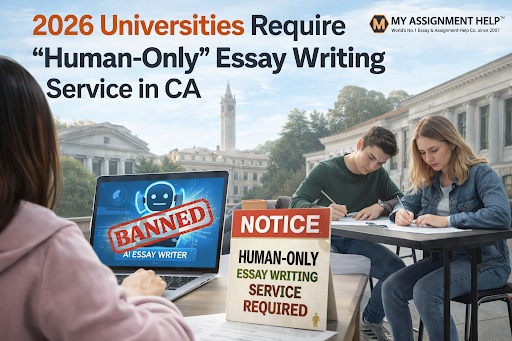
The academic world has reached a major turning point in 2026. For the past few years, the rise of automated writing tools created a massive challenge for professors and admissions boards. Initially, these tools were seen as a novelty, but they quickly began to saturate student portals with repetitive, unoriginal content. Today, the pendulum has swung back toward the value of the human mind. Universities across the globe have updated their honor codes to emphasize “Human-Specific Intelligence.” They are no longer just looking for the right answers; they are looking for the unique spark of human experience that a machine simply cannot replicate.
Because the stakes are so high, students are becoming much more careful about where they get their academic support. Many are moving away from cheap, automated generators and are instead looking for a professional Essay Writing Service that guarantees work written by real people. This shift isn’t just about following the rules; it’s about survival in a competitive landscape. A human-written essay carries a specific “voice” and a level of critical thinking that high-end university detectors now specifically scan for. In 2026, the human touch is the ultimate academic luxury.
The Rise of “Linguistic Fingerprinting” in Universities
Modern universities have moved beyond basic plagiarism checkers. They now use “Linguistic Fingerprinting” to analyze the DNA of a student’s writing. This technology looks for the natural inconsistencies, unique vocabulary choices, and personal anecdotes that define human writing.
Why Bots Fail the Fingerprint Test
Automated tools work by predicting the next most likely word in a sentence. This leads to a “flat” reading experience. Human writers, on the other hand, use metaphors, humor, and varied sentence lengths that reflect a living, breathing person. When a university sees a paper that is “too perfect,” it often triggers a red flag. Real academic success in 2026 comes from the ability to show nuance and complex emotion.
The Value of Original Research
A human expert can visit a library, interview a professional, or cite a very recent news event from this morning. Machines are limited by their training data. By using a human-centric approach, students ensure their essays are filled with fresh insights that haven’t been recycled a thousand times across the internet.
Ethical Academic Mentorship in a Digital Age
The role of writing services has also changed. In 2026, these services act more like academic mentors than ghostwriters. They provide a blueprint for how to structure an argument and how to conduct high-level research.
Critical Thinking as a Core Requirement
Professors are now designing prompts that require students to connect classroom theories to their own personal lives or local communities. A bot doesn’t have a “life,” so it cannot answer these prompts convincingly. A professional writer, however, can take those personal details and weave them into a professional academic narrative.
For students living in specific regions, the need for localized knowledge is even greater. Someone seeking assignment help canada will need a writer who understands the specific nuances of Canadian law, healthcare, or Indigenous history. A generic tool won’t know the difference between federal and provincial regulations in Ontario versus British Columbia. Human writers bridge this gap by offering localized expertise that makes the paper feel authentic and grounded in reality.
The Standard in Student Submissions
Google isn’t the only one looking for Experience, Expertise, Authoritativeness, and Trustworthiness. University graders in 2026 use these same pillars to evaluate term papers and essays.
Experience and Expertise
A professional writer who has spent ten years studying sociology brings a level of “Experience” to an essay that is visible in every paragraph. They know which scholars are currently in favor and which theories have been debunked. This “Expertise” is what earns the high marks that students need to advance into graduate programs or high-paying careers.
Building Trust Through Transparency
When a student submits a paper that is clearly human-written, it builds a bond of trust with their professor. It shows that the student values the educational process enough to seek high-quality, ethical support. This transparency is becoming the new gold standard for academic integrity in 2026.
Future-Proofing Your Academic Career
As we move further into the decade, the ability to write clearly and persuasively will be the most valuable skill in the job market. By using human-only services, students aren’t just getting a grade; they are learning by example. They see how a professional constructs a thesis, how they use evidence, and how they conclude a complex thought.
The Long-Term Benefit of Human Support
Reading a high-quality, human-written essay helps improve a student’s own writing style. It is a form of passive learning that pays off long after the assignment is turned in. In a world full of digital noise, the ability to communicate with a clear, human voice is what will make you stand out to future employers and leaders.
Conclusion: Why the Human Mind Wins
The 2026 academic year has proven that while technology is a helpful tool, it can never replace the heart of education: the exchange of ideas between people. Universities require “Human-Only” content because they want to know what you think, how you feel, and how you see the world. By choosing human-led academic support, you are choosing to stay true to that mission. You are ensuring that your education remains a reflection of your own potential and a stepping stone to a bright, authentic future.
About the Author
Jack Thomas is a Senior Academic Consultant at MyAssignmentHelp. With over a decade of experience in content strategy and educational mentoring, Jack has become a leading voice in the “Human-First” movement in academia. He specializes in helping students adapt to the changing standards of 2026 and believes that every student has a unique story worth telling. When he isn’t working, Jack enjoys photography and volunteering as a youth mentor.
FAQs
1. How do universities detect AI-written essays in 2026?
Universities use advanced linguistic analysis tools that look for “predictive patterns.” Human writing is naturally more varied and contains unique cultural and personal references that AI cannot simulate.
2. Is it safe to use a human writing service?
Yes, as long as the service is transparent about their writers’ credentials and provides a 100% human-written guarantee. Ethical services act as tutors and providers of model papers to help you learn.
3. Why is localized help, like in Canada, so important?
Education systems vary by country and region. A local expert understands the specific curriculum standards, spelling (e.g., Canadian vs. US English), and regional laws required for a top grade.
4. Does “Human-Only” mean I can’t use any digital tools?
Not at all. You can use digital tools for research and spell-checking. The requirement is that the thinking and the prose must be generated by a human mind.
5. How does a human writer improve my own grades?
By providing a high-quality example, a human writer shows you the proper way to argue a point, cite sources, and structure a paper, which you can then apply to your future work.
Stay in touch to get more updates & news on Cars Destiny!